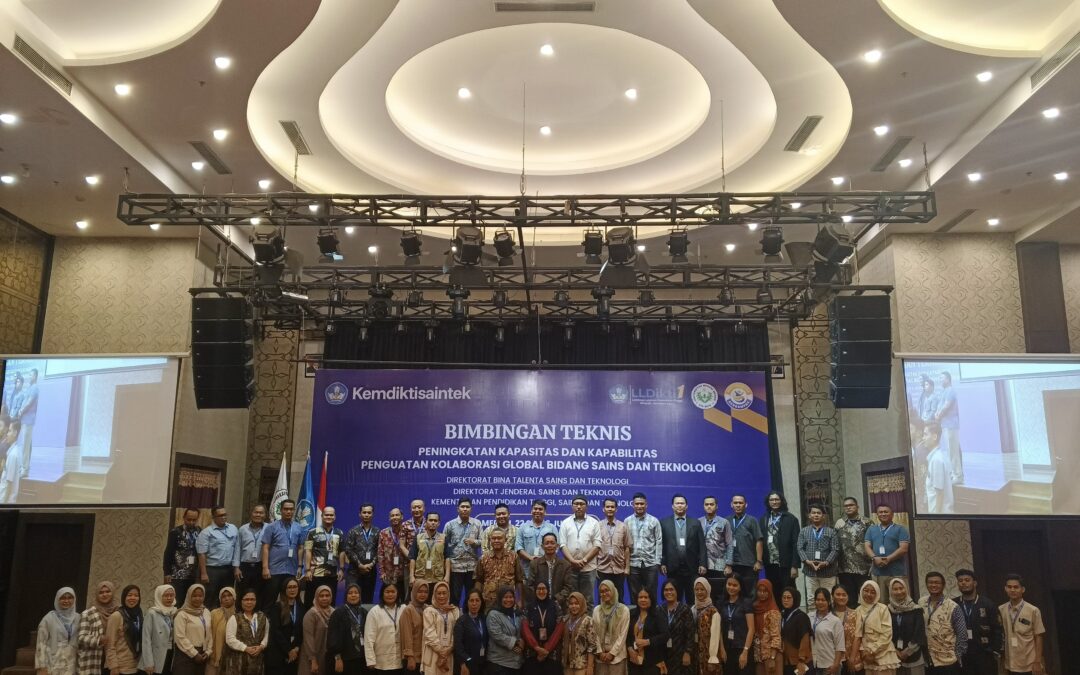
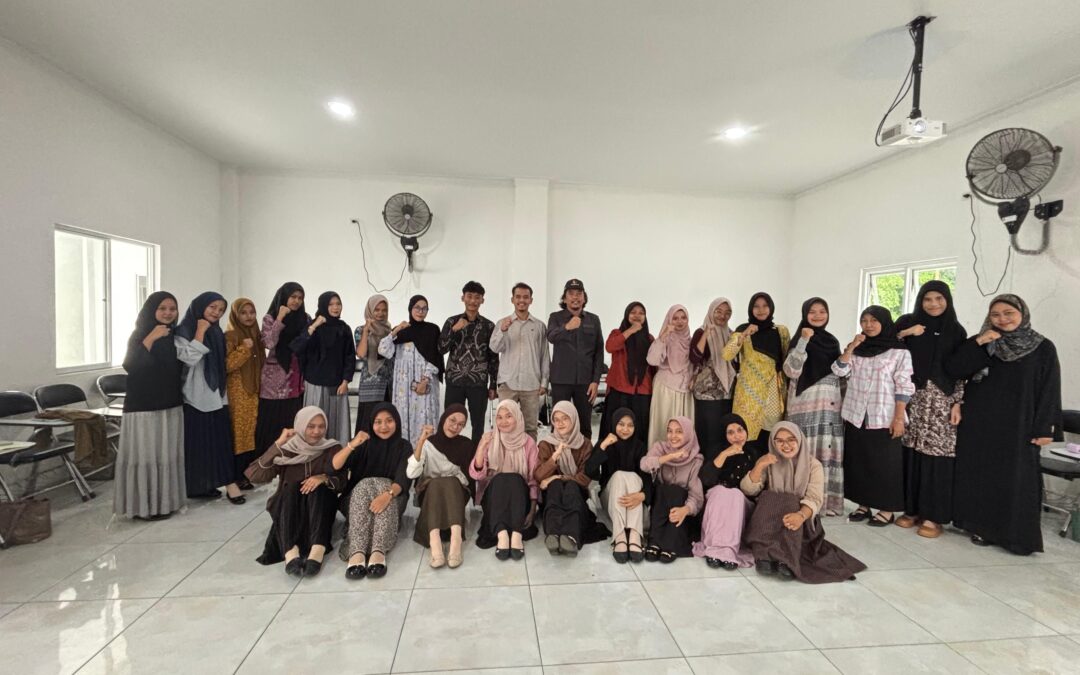
STKIP Al Maksum Langkat terus menunjukkan komitmennya dalam meningkatkan kualitas dan daya saing institusi melalui penguatan jejaring kerja sama internasional. Sebagai wujud nyata dari komitmen tersebut, STKIP Al Maksum berpartisipasi dalam Bimbingan Teknis Peningkatan Kapasitas dan Kapabilitas Penguatan Kolaborasi Global Bidang Sains dan Teknologi yang diselenggarakan di Medan pada tanggal 22–26 Juni 2026. Dalam kegiatan tersebut, STKIP Al Maksum diwakili oleh Wakil Ketua III, Azri Ranuwaldy Sugma, S.Pd., M.Psi., dan Kepala Bagian Alumni, Kerja Sama, dan Humas, Mustafa Habib, S.Pd.I., M.Pd.. Kehadiran kedua delegasi tersebut merupakan bagian dari upaya institusi untuk memperkuat kapasitas sumber daya manusia dalam membangun dan mengembangkan kolaborasi global yang mendukung kemajuan pendidikan tinggi. Kegiatan ini diselenggarakan oleh Direktorat Bina Talenta Sains dan Teknologi di bawah naungan Direktorat Jenderal Sains dan Teknologi, serta menjadi forum strategis bagi perguruan tinggi untuk meningkatkan pemahaman mengenai tata kelola kerja sama internasional, pengembangan kemitraan global, mobilitas akademik, kolaborasi riset, dan berbagai program internasional lainnya yang mendukung transformasi pendidikan tinggi di Indonesia. Melalui partisipasi dalam kegiatan ini, STKIP Al Maksum memperoleh kesempatan untuk memperluas jejaring dengan berbagai perguruan tinggi dan lembaga dari seluruh Indonesia, sekaligus mendapatkan wawasan mengenai praktik terbaik dalam pengembangan kolaborasi global di bidang sains dan teknologi. Pengetahuan dan pengalaman yang diperoleh selama kegiatan diharapkan dapat menjadi landasan dalam merancang program kerja sama internasional yang lebih inovatif, produktif, dan berkelanjutan. Dengan memperkuat kapasitas kelembagaan serta membangun sinergi dengan berbagai mitra strategis, STKIP Al Maksum terus berupaya meningkatkan kualitas pendidikan, penelitian, dan pengabdian kepada masyarakat guna memberikan kontribusi nyata bagi kemajuan bangsa dan perkembangan ilmu pengetahuan serta teknologi di era globalisasi.
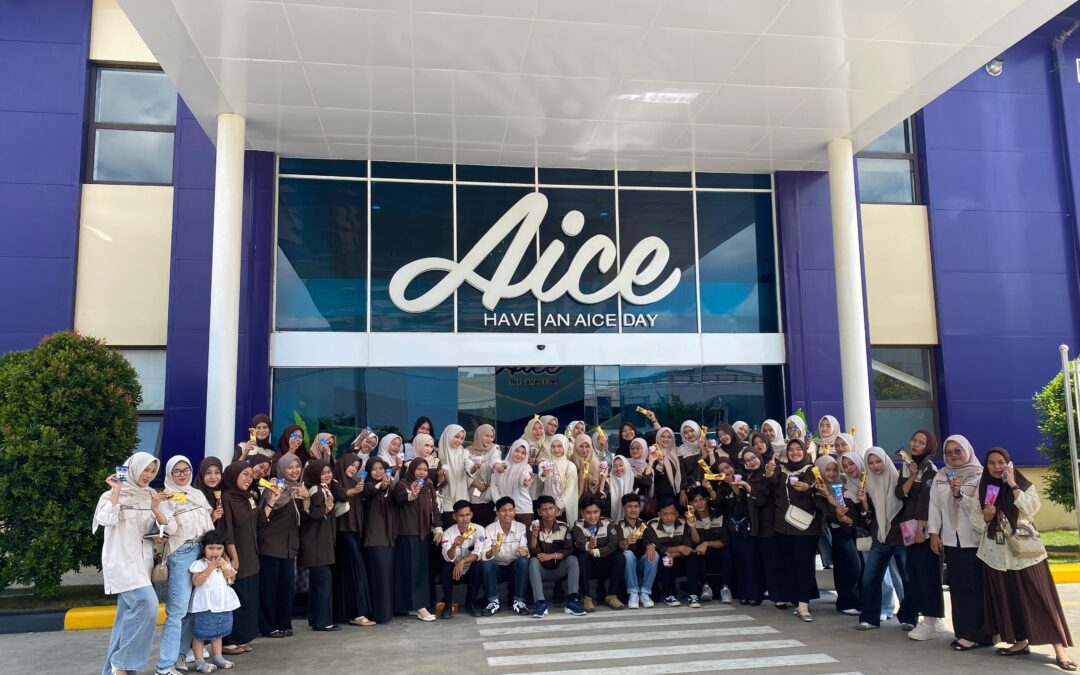
Selama dua hari (12-13 Juni 2026), mahasiswa dan dosen Prodi Pendidikan IPA STKIP Al Maksum melakukan perjalanan penuh makna dengan tema “Eksplorasi Lingkungan: Harmonisasi Sains dan Kelestarian Alam di PT Aice serta Kawasan Danau Toba.”
Perjalanan ini bukan sekadar liburan, melainkan langkah nyata dalam memadukan teori sains di ruang kelas dengan realitas industri modern serta keindahan ekosistem alam. Mulai dari melihat kecanggihan teknologi pangan hingga mengamati langsung pelestarian lingkungan di salah satu danau vulkanik terbesar di dunia.
Lokasi: PT Aice Sumatera Utara
Memasuki area industri PT Aice, mahasiswa diajak melihat langsung bagaimana prinsip-prinsip sains—mulai dari termodinamika, sistem higienitas, hingga teknologi otomatisasi—diterapkan dalam skala besar. Kunjungan edukasi ini memberikan pandangan baru bahwa ilmu IPA sangat dekat dan aplikatif dalam industri pangan modern. Belajar sains jadi terasa lebih seru (dan manis!) lewat pengalaman langsung ini.
Lokasi: Kawasan Danau Toba
Eksplorasi berlanjut ke ikon Sumatra Utara, Danau Toba. Di sini, fokus beralih pada kegiatan penelitian lingkungan dan pengabdian. Mahasiswa mengamati langsung keanekaragaman hayati, kondisi ekosistem perairan, serta berdiskusi mengenai pentingnya menjaga harmoni antara pariwisata, geologi, dan kelestarian alam sekitar. Sebagai calon pendidik IPA, menjaga bumi adalah bagian dari tanggung jawab ilmiah kita.
Kami belajar bahwa sains tidak hanya ada di dalam buku, tapi hidup di sekitar kita—baik dalam kecanggihan teknologi maupun dalam setiap sudut kelestarian alam yang harus kita jaga. Science is fun, nature is beautiful.
STKIP Al Maksum kembali menunjukkan komitmennya dalam menghadirkan pembelajaran yang berbasis praktik dan pengalaman profesional melalui kegiatan Bawaslu Mengajar. Kegiatan ini difasilitasi oleh STKIP Al Maksum dengan menghadirkan narasumber dari Bawaslu Kabupaten Langkat, yaitu Ahmad Kurniawan Harahap.
Dalam kegiatan tersebut, Ahmad Kurniawan Harahap menyampaikan materi mengenai peran dan fungsi Bawaslu dalam menjaga kualitas demokrasi, pentingnya pengawasan partisipatif, pencegahan pelanggaran pemilu, serta tantangan pengawasan di era digital. Mahasiswa juga diberikan pemahaman tentang bagaimana generasi muda dapat berkontribusi dalam menciptakan pemilu yang jujur, adil, dan berintegritas.
Kegiatan berlangsung secara interaktif dengan sesi diskusi dan tanya jawab yang mendapat antusiasme tinggi dari para mahasiswa. Berbagai pertanyaan terkait pengawasan pemilu, partisipasi masyarakat, dan peran mahasiswa dalam mengawal demokrasi menjadi topik yang menarik perhatian peserta.
Dosen STKIP Al Maksum, Mustafa Habib, M.Pd menyampaikan apresiasi kepada Bawaslu Kabupaten Langkat atas kesediaannya berbagi ilmu dan pengalaman kepada mahasiswa. Kegiatan ini diharapkan dapat meningkatkan literasi demokrasi serta menumbuhkan kesadaran mahasiswa untuk berpartisipasi aktif dalam menjaga kualitas penyelenggaraan pemilu di Indonesia.
Melalui program Bawaslu Mengajar, STKIP Al Maksum terus berupaya memperkuat sinergi dengan berbagai lembaga dan menghadirkan pembelajaran yang relevan dengan kebutuhan masyarakat serta perkembangan kehidupan berbangsa dan bernegara.
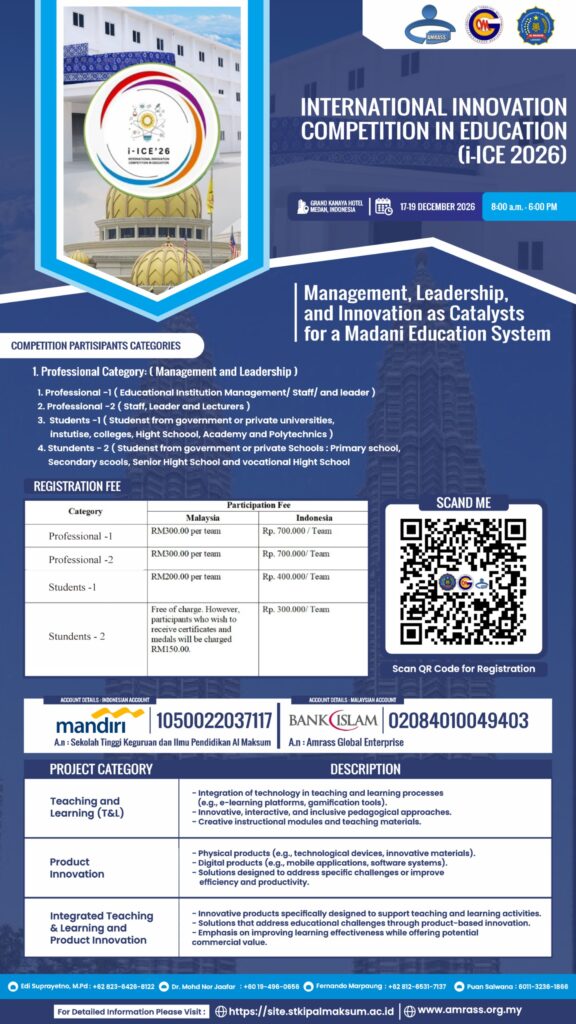
COMPETITION INFORMATION Competition Date : 17–19 December 2026 Venue : Grand Kanaya Hotel, Medan, Indonesia Time : 8:00 a.m. – 6:00 p.m. Organizer: Association of Malaysian Researchers and Social Services (AMRASS) In Collaboration With STKIP Al Maksum and Majlis Guru Cemerlang Melaka
THEME : Management, Leadership, and Innovation as Catalysts for a Madani Education System
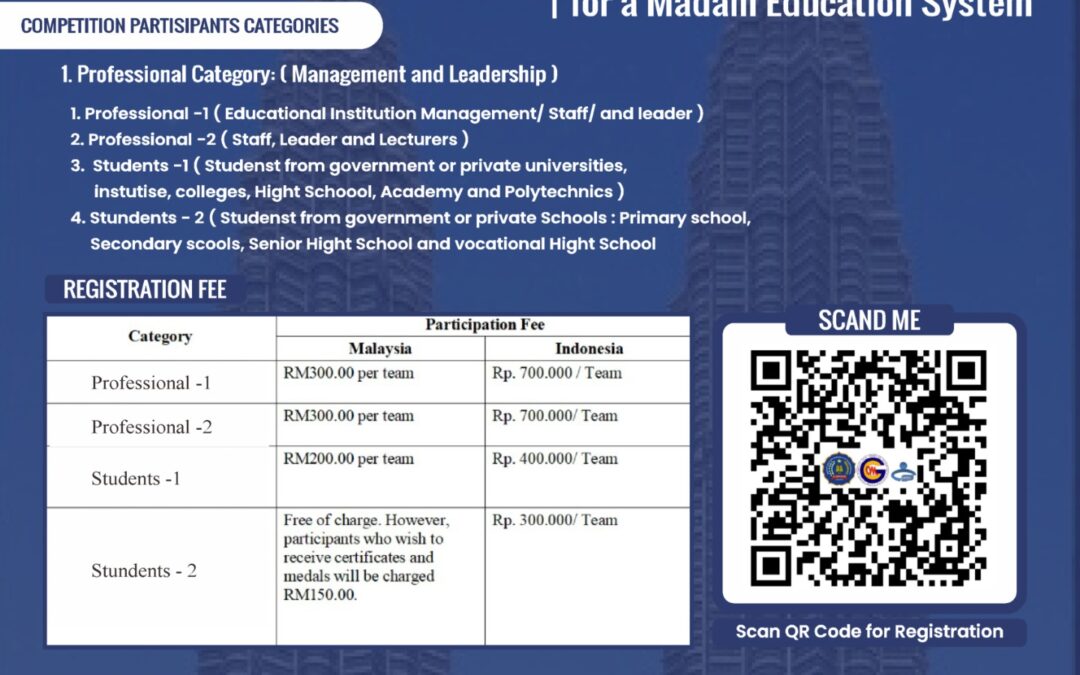
3. Students – 1 Eligible Participants: Students from government or private universities, Institutes, Colleges, High School, Academy and Polytechnics Team Composition: Maximum of six (6) members per team Consisting of five (5) students and one (1) lecturer supervisor
4. Students – 2 Eligible Participants: Students from government or private Schools: Primary school, Secondary school, Senior High School and Vocational High School Team Composition: Maximum of six (6) members per team Consisting of five (5) students and one (1) teacher supervisor
REGISTRATION FEE Category Participation Fee Malaysia Indonesia Professional – 1 (Educational Institution management/ staff and leader) RM300.00 per team Rp. 700.000 / Team Professional – 2 (Staff, Leaders and Lecturers) RM300.00 per team Rp. 700.000/ Team Students – 1 (Students from government or private universities, Institutes, Colleges, High School, Academy and Polytechnics)
RM200.00 per team Rp. 400.000/ Team Students – 2. (Students from government or private Schools: Primary school, Secondary school, Senior High School and Vocational High School) Free of charge. However, participants who wish to receive certificates and medals will be charged RM150.00. Rp. 300.000/ Team Payment Details Malaysia Indonesia Bank : Bank Islam Account Number : 02084010049503 Name : AMRASS GLOBAL ENTERPRISE Reference : i-ICE 2026 Payment Description: Team Leader’s Name and Total Payment Amount
Example: Ali bin Ahmad – RM300 Bank : Mandiri Account No. : 1050022037117 Name : Sekolah Tinggi Keguruan dan Ilmu Pendidikan Al Maksum Reference : i-ICE 2026 Payment Description: Team Leader’s Name and Total Payment Amount
Example: Muhammad Hassan – Rp.700.000 TERMS AND CONDITIONS The competition is open to all innovators and researchers who are interested in participating. Entries may be submitted individually or in groups. The maximum number of participants for each group entry is six (6). The innovation or invention submitted must be original and new. If the innovation has previously participated in competitions or received awards, substantial modifications or improvements must be made before submission. Innovations may be presented in the form of: Commercial products Published articles Prototypes Models Plans Drawings Photographs Written documents All submissions must be the original work of the participants and must not infringe upon the intellectual property rights of any third party. Entries found to involve plagiarism or copyright violations will be disqualified. Participation fees paid will not be refunded. Each innovation may only be submitted under one (1) competition category. The deadline for registration and abstract submission is 15 August 2026. Any changes to this date will be announced by the organizer. Once registration has been approved, participants are not permitted to make any changes to: Team members’ names Project title Competition category Names printed on certificates will follow exactly the spelling provided in the registration form.
INNOVATION PROJECT CATEGORY PROJECT CATEGORY DESCRIPTION Teaching and Learning (T&L) Definition: Focuses on innovations in teaching and learning methodologies that enhance student learning experiences and improve the effectiveness of knowledge delivery.
Key Features: Integration of technology in teaching and learning processes (e.g., e-learning platforms, gamification tools). Innovative, interactive, and inclusive pedagogical approaches. Creative instructional modules and teaching materials.
Examples of Projects: A gamified learning module for Diploma Economics courses. The application of Augmented Reality (AR) in construction technology education. Visual learning aids designed to explain complex concepts such as supply and demand. Product Innovation Definition: Focuses on the development or enhancement of innovative physical or digital products that are practical, user-oriented, and capable of delivering tangible benefits to end users.
Key Features: • Physical products (e.g., technological devices, innovative materials). • Digital products (e.g., mobile applications, software systems). • Solutions designed to address specific challenges or improve efficiency and productivity.
Examples of Projects: • Environmentally sustainable construction materials for the building industry. • Portable diagnostic devices for healthcare applications. • Smart facility management applications and systems Integrated Teaching & Learning and Product Innovation Definition: Combines product innovation with teaching and learning (T&L) approaches, where the developed product serves as a tool, platform, or medium to facilitate and enhance the educational process.
Key Features: Innovative products specifically designed to support teaching and learning activities. Solutions that address educational challenges through product-based innovation. Emphasis on improving learning effectiveness while offering potential commercial value. Examples of Projects: A mobile application integrating Diploma Economics learning modules with interactive exercises and assessments. A virtual construction simulator for teaching building technology concepts. A STEM experiment kit equipped with comprehensive teaching and learning guidelines for educators
REGISTRATION PROCEDURES Participants must complete registration through the Google Form provided at: https://s.id/INTERNATIONAL-INNOVATION-COMPETITION2026 All participants are required to complete both: The i-ICE 2026 Registration Form The Abstract Submission Form Abstract templates can be downloaded from: https://shorturl.at/NVHFm Participants must complete payment before registration and upload proof of payment through the registration form. The deadline for registration, abstract submission, and payment is 15 October 2026. COMPETITION FORMAT AND JUDGING PROCEDURES This competition serves as the final stage and will be conducted face-to-face. Participants who withdraw or fail to attend on the competition day will have their entries cancelled. Participation fees will not be refunded. Each participant/team must display their innovation materials at the exhibition booth provided. Judging will be conducted at the booth according to the designated category. Presentation Session : 10 minutes Question and Answer Session : 5 minutes The decisions made by the appointed judges are final. No appeals will be entertained. Winners will be announced during the Closing Ceremony of i-ICE 2026.
EVALUATION CRITERIA Innovations will be evaluated based on the following criteria: 1. Creativity and Novelty The innovation demonstrates originality and creativity, whether through a completely new invention or adaptation of existing resources. The innovation should align with its objectives and address current needs effectively. 2. Application, Impact, and Community Benefits a. Significance and Practicality Evidence should demonstrate that the innovation provides clear benefits in improving organizational performance, teaching effectiveness, and learning outcomes. b. Effectiveness, Efficiency, and Productivity Evidence should demonstrate that the innovation contributes to improved management practices and knowledge transfer processes that are more efficient, faster, more accurate, and easier to implement. The innovation should also contribute positively to work performance and teaching and learning processes. 3. Implementation Potential (Replicability) Evidence should demonstrate that the innovation has been successfully implemented, either fully or through pilot testing, and has achieved its intended objectives. The innovation should be adaptable and replicable by other users or organizations with minimal modifications. 4. Cost Effectiveness Evidence should demonstrate that the innovation increases productivity and organizational performance in terms of cost, time, manpower, and value for money while maintaining or reducing operational costs. 5. Commercialization Potential The innovation should demonstrate strong market potential and the capacity for broader dissemination and adoption among relevant stakeholders. 6. Presentation and Delivery The innovation should be presented systematically, attractively, and professionally. The presentation should: Be clear and concise Demonstrate comprehensive understanding of the innovation Reflect confidence and professionalism Provide evidence of collaboration Adhere to the allocated presentation time 7. Recognition and Achievement Evidence of recognition such as: Awards Certificates Publications Copyright registration Intellectual property protection will be considered as an added value.
AWARDS AND CERTIFICATES Achievement Awards in the categories of: Gold Silver Bronze will be awarded based on the score achieved by each entry. Each entry will receive: One (1) Certificate of Participation One (1) Achievement Certificate (Gold, Silver, or Bronze) One (1) Medal corresponding to the achievement level A Special Best Innovation Award will be presented to selected entries in each category, subject to the organizer’s discretion. Additional certificates and medals may be requested at the following rates: Additional Certificate: RM20.00 per copy/ Rp. 30.000/ copy Additional Medal: RM60.00 per medal/ Rp. 150.000/ medal Additional shipping charges will apply for postal delivery. Applications for additional certificates and medals will only be opened after the competition concludes. Participants will be required to complete a designated Google Form provided by the organizer.
Organized by : Association of Malaysian Researchers and Social Services (AMRAS) in collaboration with STKIP Al Maksum Indonesia
📍 Venue : Grand Kanaya Hotel, Medan, Indonesia 📅 Date : 17 – 19 December 2026
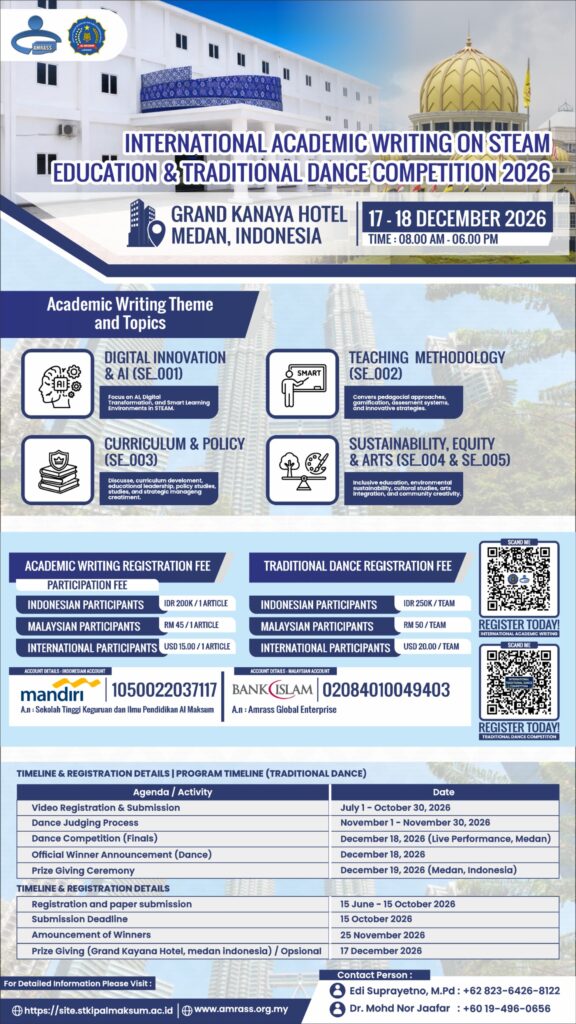
A. BACKGROUND The International Traditional Dance Competition is part of the International Colloquium on STEAM Education (IC-STEAM EDU 2026), an international event designed to strengthen intercultural understanding, creativity, innovation, and global collaboration among students, educators, artists, and researchers from various countries. This competition serves as a platform for participants to preserve and promote traditional cultural heritage through artistic performances while fostering international friendship and harmony.
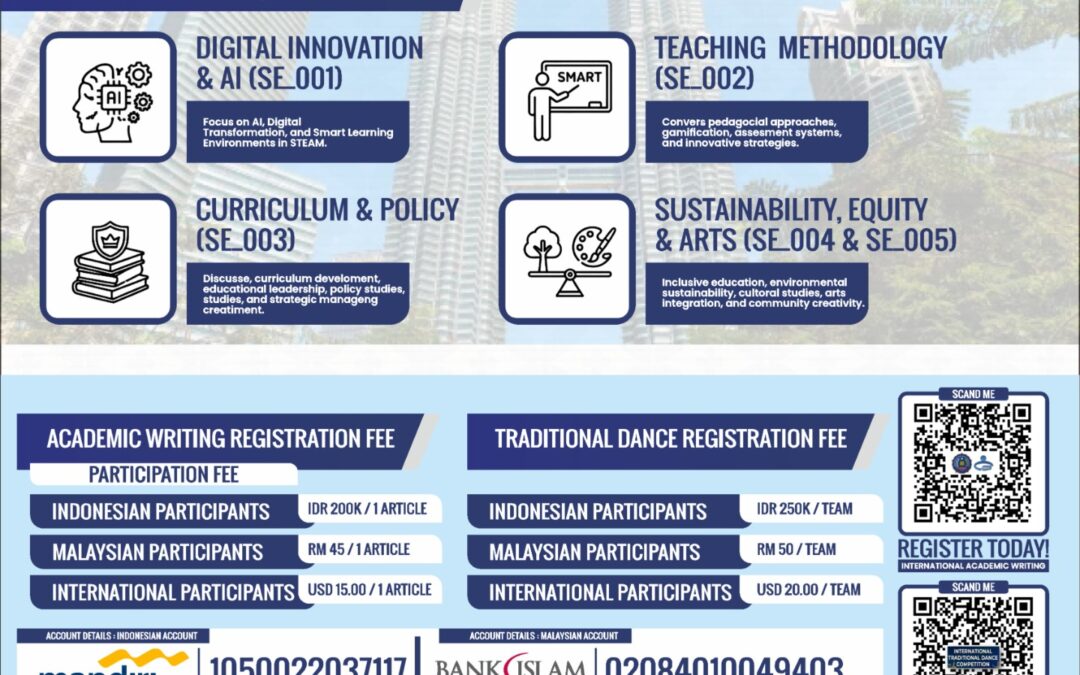
B. GENERAL REQUIREMENTS Participants are university students from various countries. Participants may register as: Solo performers, Duet performers, or Group performers. Group performances must consist of 3–6 participants. The official assignment/recommendation letter must be uploaded through the official registration link as part of the administrative requirements. Participants must upload proof of registration payment through the provided registration link. Only participants who complete all academic and administrative requirements will be eligible for the competition Each participant/team must pay the registration fee and complete the registration form through the official registration link provided by the committee. Indonesian Participants : IDR 250.000/ Team Malaysian Participants : RM 50 / Team International Participants : USD 20.00/ Team
Account Details: Indonesian Account Bank : Mandiri Account No. : 1050022037117 Name : Sekolah Tinggi Keguruan dan Ilmu Pendidikan Al Maksum
Malaysian Account Bank : Bank Islam Malaysia Account No. : 02084010049503 Name : AMRASS GLOBAL ENTERPRISE Proof of payment must be uploaded during the registration process. All participants must follow the competition regulations and deadlines determined by the committee. The decision of the judges is final and cannot be contested.
C. ONLINE COMPETITION SYSTEM The competition will be conducted fully online. Participants must: record their traditional dance performance in video format, upload the video to YouTube, and submit the YouTube link to the organizing committee. The uploaded video must remain public until the official announcement of winners. Video title format: Country – Dance Title – IC-STEAM EDU 2026 Example: Indonesia – Saman Dance – IC-STEAM EDU 2026 The YouTube video description must include: Participant/Team Name, University Name, Country, Dance Title, Short Dance Description, Official hashtags: #ICSTEAMEDU2026 #InternationalDanceCompetition #AMRAS #STKIPAlMaksumIndonesia Participants must submit the YouTube link through the official submission form before the deadline. D. SPECIAL REQUIREMENTS The dance performed must represent a traditional or cultural dance originating from the participant’s country or region. Modern remix choreography that removes the original cultural identity is not permitted. The performance must not contain: violence, pornography, hate speech, discrimination, or political propaganda. Duration of performance minimum 4 minutes and maximum 7 minutes Participants must provide a short written explanation containing: title of the dance, country or region of origin, meaning and philosophy of the dance. All submitted works must be original and respect cultural authenticity. E. VIDEO RECORDING GUIDELINES The video must clearly show the full dance performance. Video quality should be clear and stable. Editing is allowed only for: opening title, participant identity, and basic video enhancement. Excessive visual effects that alter the authenticity of the performance are not permitted. Participants may use indoor or outdoor performance settings. The committee reserves the right to reject videos with inappropriate content or poor technical quality. F. JUDGING CRITERIA Participants will be evaluated based on: Authenticity of traditional dance, Choreography and synchronization, Cultural interpretation, Creativity and artistic expression, Costume and property suitability, Performance quality, Video presentation quality, Audience engagement on YouTube. The judging system uses a 10-point scale through open jury evaluation. Each jury member will provide one overall score for the submitted performance. Additional online engagement assessment includes: Number of YouTube viewers/views, Number of likes, Number of positive comments, Audience interaction and engagement. These engagement indicators will contribute to the final evaluation. G. VIOLATIONS Participants may be disqualified for: Uploading performances containing offensive or inappropriate content; Using copyrighted material without permission; Exceeding the maximum performance duration; Manipulating YouTube views, likes, or comments using bots or illegal methods; Plagiarism or imitation of another participant’s performance; Submitting videos after the deadline. H. AWARDS AND RECOGNITION The three top winners of the International Traditional Dance Competition will receive: Medal, International E-Certificate, Special Appreciation Award. The 1st Place Winner and/or Grand Prix Winner will receive a special monetary awards/reward funds provided by the organizing committee and special opportunity to perform at the International Colloquium on STEAM Education (IC-STEAM EDU 2026) in Indonesia. During the performance, the committee will provide lunch and coffee breaks, while transportation, accommodation, and other personal expenses must be covered by the participants or their respective universities/institutions. I. IMPORTANT DATES Registration Deadline : November 5, 2026 Video Submission Deadline : November 25, 2026 Judging Session : November 26 – December 10, 2026 Winner Announcement : December 17, 2026
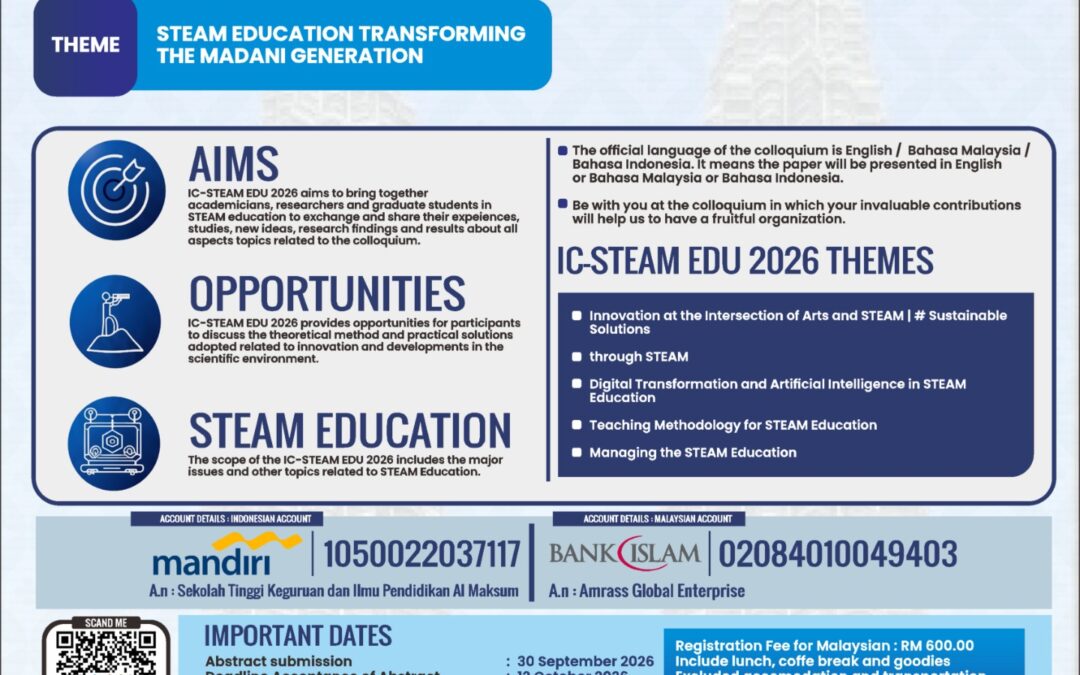
The 2nd International Colloquium on STEAM Education (IC-STEAM EDU 2026) is an international academic gathering organized by the Association of Malaysian Researchers and Social Services (AMRASS) in collaboration with STKIP Al Maksum Indonesia and strategic academic partners. The colloquium serves as a global platform for academics, researchers, educators, students, policymakers, and practitioners to exchange knowledge, present innovative research findings, and discuss emerging issues in Science, Technology, Engineering, Arts, and Mathematics (STEAM) Education.
The event will be held on 17–18 December 2026 at Grand Kanaya Hotel, Medan, Indonesia, under the theme:
“STEAM Education Transforming the Madani Generation”
This theme highlights the vital role of STEAM education in shaping future generations who are innovative, ethical, technologically competent, and capable of contributing to sustainable global development.
Objectives of the Colloquium
IC-STEAM EDU 2026 aims to:
Promote international collaboration among researchers, educators, and academic institutions.
Provide a platform for presenting and publishing high-quality research in STEAM-related fields.
Encourage interdisciplinary discussions on educational innovation and sustainable development.
Facilitate the exchange of ideas, best practices, and research findings among participants from different countries.
Strengthen academic networks and partnerships at the regional and international levels.
Main Themes
Participants are invited to submit papers related, but not limited, to the following themes:
Innovation at the Intersection of Arts and STEAM
Sustainable Solutions through STEAM
Digital Transformation and Artificial Intelligence in STEAM Education
Teaching Methodology for STEAM Education
Managing STEAM Education
Publication Opportunity
All accepted papers will undergo a double-blind peer review process. Selected papers will be published in the conference proceedings, subject to editorial review and publication requirements.